|
...Mould it with Silicone RTV the Simple Way
This How-to will tell you how to mould an item
in Silicone RTV using the most simple method.
 |
The cure of
Silicone RTV rubbers can be inhibited by other chemicals such
as latex, and sulphur found in some types of clay. Please
check compatibility before moulding.
This silicone is NOT safe for use directly on skin or for use
with food products such as making ice cube moulds.
|
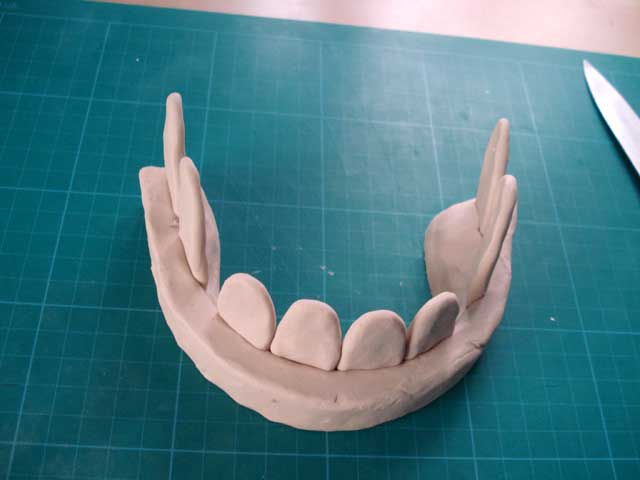
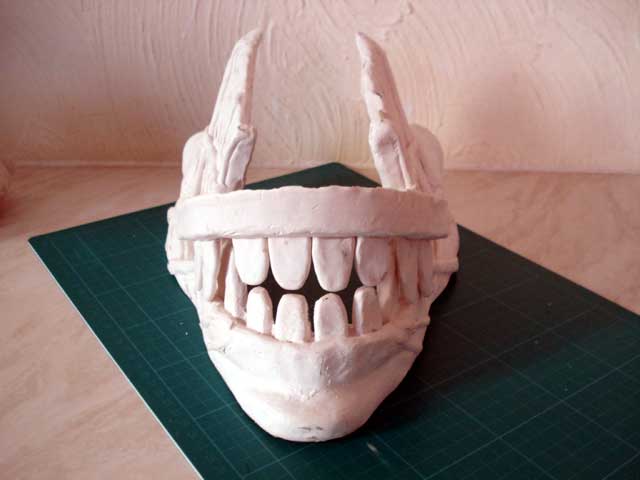
For this example we are going to make a
Silicone mould from a clay sculpt which is the top jaw set of
teeth for a
monster mask/prop. This is item is sculpted in Oil Based Clay which is
sulphur free, so we know we will have no issues with the Silicone
curing.
Note that the original sculpt was made by
firstly pushing the Oil Based Clay into a fibreglass head which is why
there are odd ridges and marks in the base piece. However you'll
see that all these details get picked up in the moulding process:
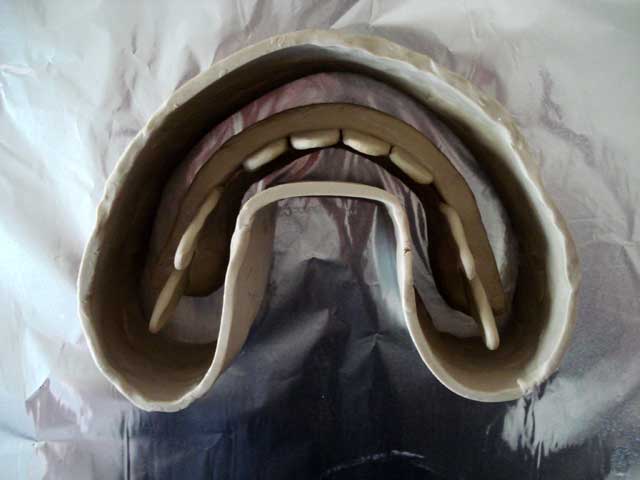
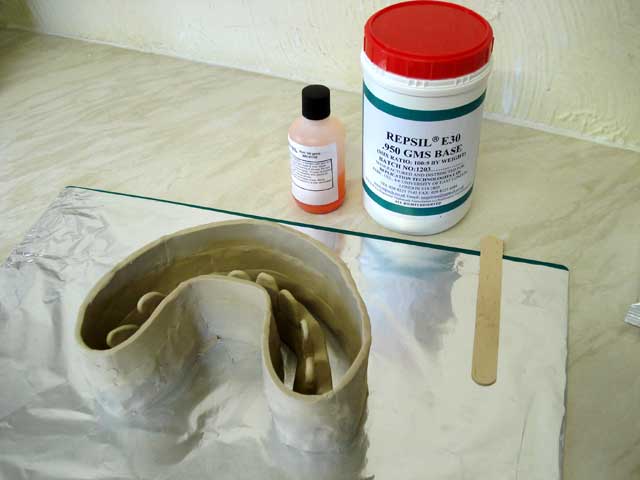
The piece is boxed off into a container made
from some more clay. This will give us something to pour the
Silicone into to stop it running away. Make sure you use firm clay
for this and make sure it's stuck to the base properly so it
doesn't leak.
Other possible methods for this are to use an
ice cream carton or yogurt pot for smaller pieces, or even to
build a box out of Lego bricks to make it the most efficient
shape:
|
|
Read the manufactures instructions and
data sheet before using this product.
Wear gloves and goggles, and use the product in a well
ventilated area, or wear a suitable respirator/face mask.
The catalyst for Silicone is harmful, so
the entire kit should be kept out of the reach of children and
animals. |
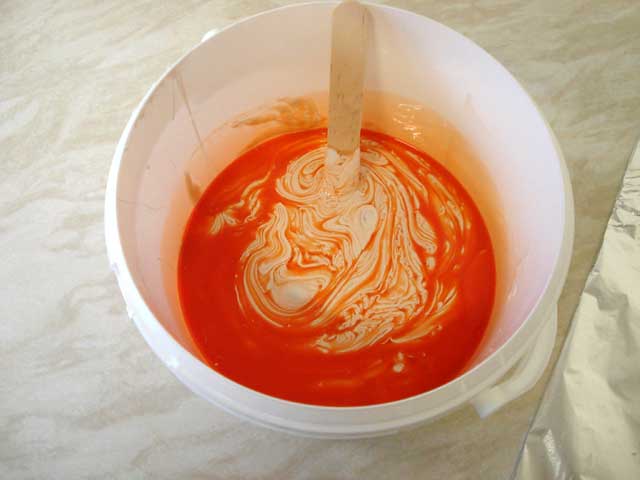
We are now going to mix up our silicone. We
mixed all of a 1Kg kit with all the catalyst supplied:
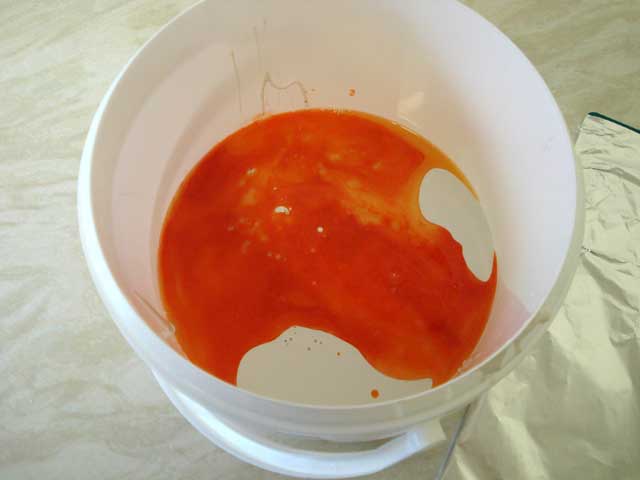
The catalyst is orange in colour, whereas the
base Silicone is white. This enables you to see when it's properly
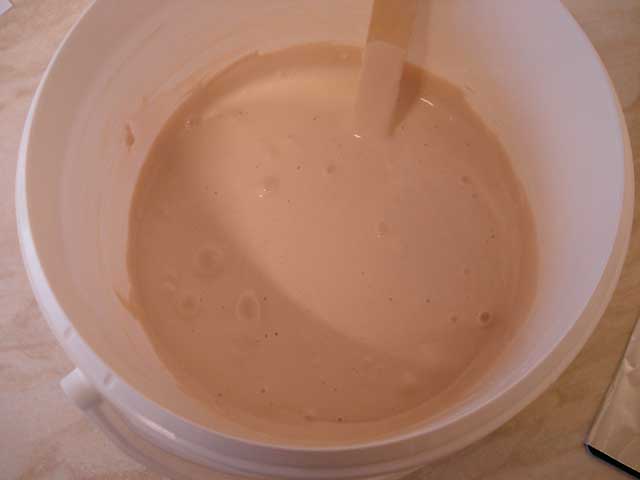
mixed - you should find the whole thing is a uniform salmon pink
colour once it's mixed. It's recommended to pour the mixed
Silicone into another container so make sure it's mixed properly -
otherwise you can never get the base Silicone that's stuck to the
side of the container mixed with catalyst. In this case we just
mixed it in one container, but if you do this be careful if you
scrape the last bit out of the pot because it probably won't be
mixed with catalyst.
Here it is fully mixed:
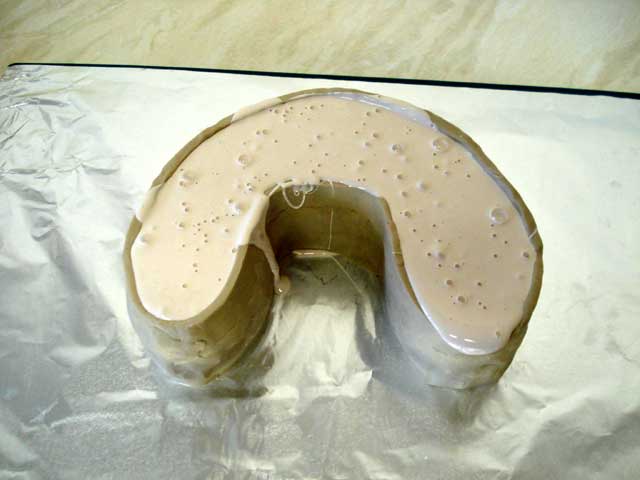
Now it's time to pour the silicone into the
box. The recommended way to do this is to pour it into the lowest
point first so that no air bubbles are trapped as the level rises.
As you can see any air bubbles will rise to the surface AWAY from
the piece we are moulding:
This silicone has a working time of 90-120 mins
and cures in 22-24 hours, according to the manufacturer. We found
that it had lost it's tackiness and set through after around four
hours, although it won't achieve it's full strength until 20+
hours.
24 hours later...
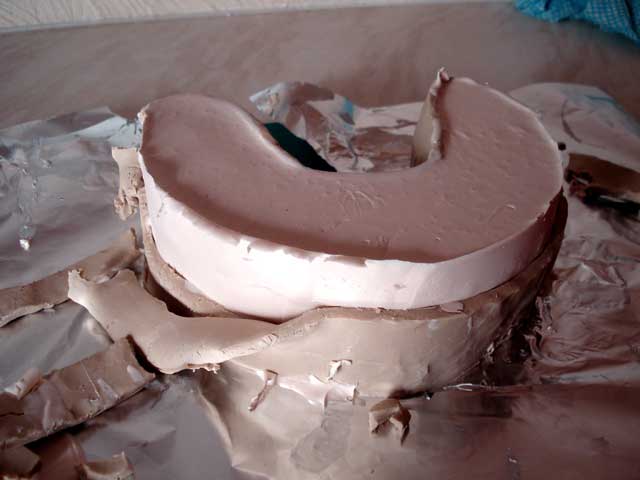
Now the Silicone has cured we can just remove
the clay. There's no need to making any rigid supporting mother
mould in the this example because we have one solid block of
rubber which will stay in shape:
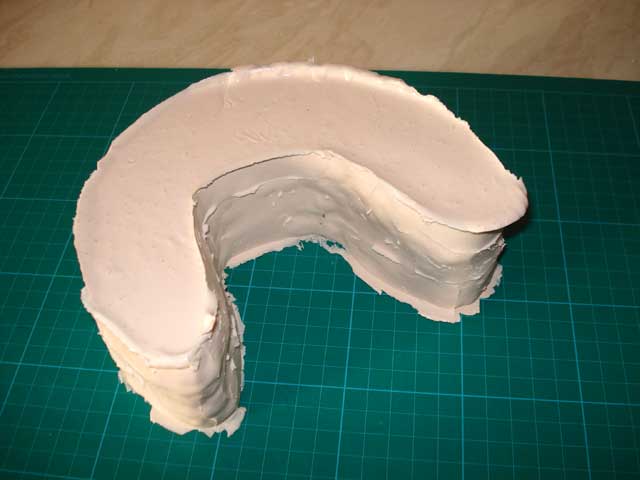
We can now turn it over the remove the clay
sculpt. Oil Based Clay releases very well from Silicone so we can
almost pull it out in one piece, just a couple of the teeth got
left behind which weren't too hard to get out:
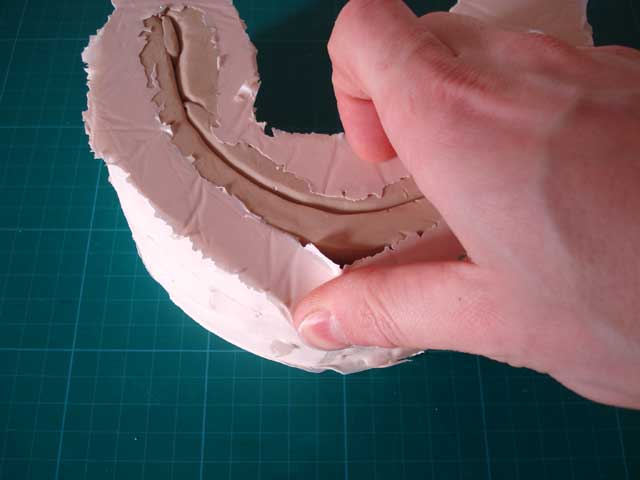
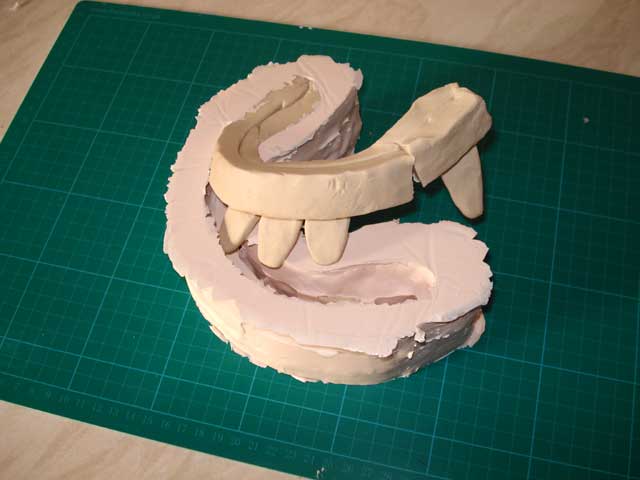
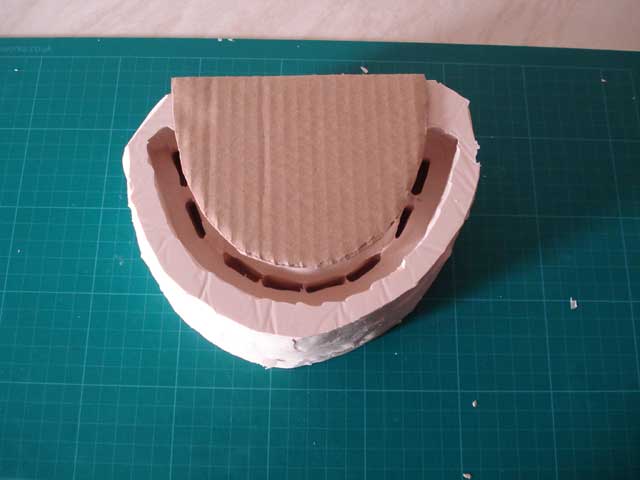
Here's the empty mould ready for casting in
resin:
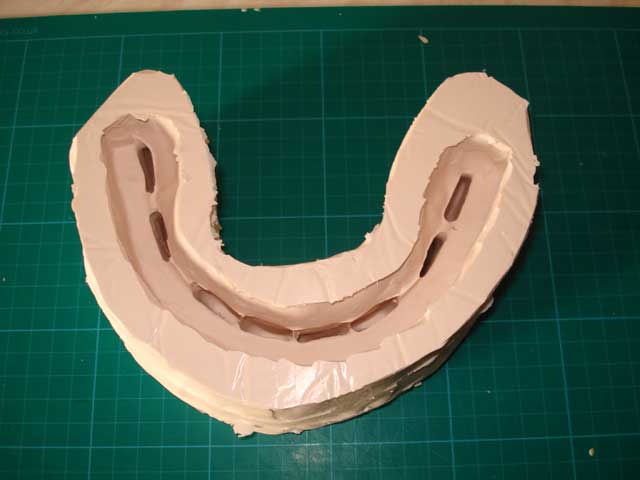
Although it looks a funny shape, in fact it's a
perfect replica of the original sculpt, and it still fits the card
template that the original was sculpted around:
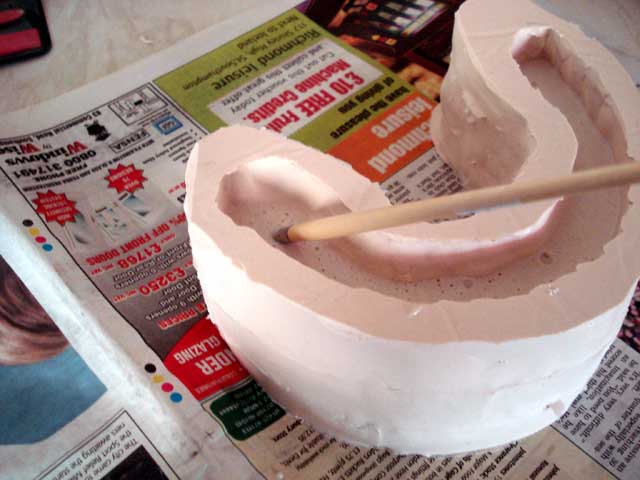
Now we can cast the piece in resin. We will use
Jesmonite for this which is poured into the mould, we used a small
brush to make sure it goes into all the features and there is no
air trapped. Again any air bubbles rise to the surface AWAY from
the top of the piece as it is being cast 'upside down'.
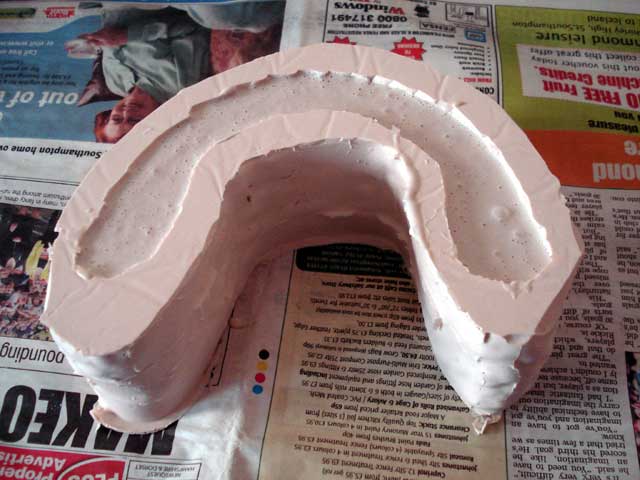
After the Jesmonite has set, we left this one
overnight, it can be removed. Again Jesmonite releases very well
from Silicone so it practically slid out:
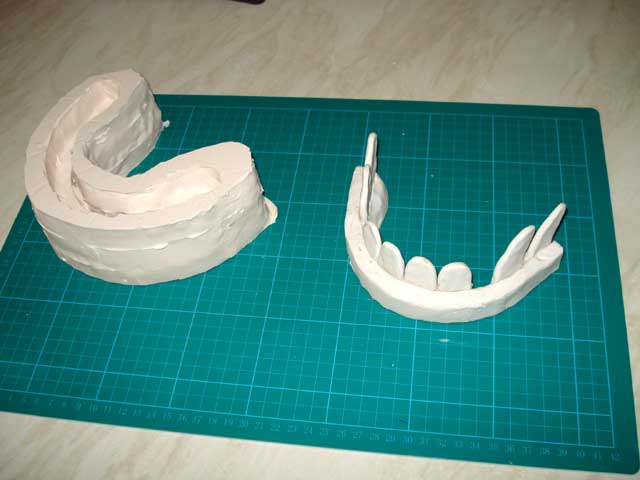
And here's the piece next to the lower jaw we
made in the example with Thickened Silicone:
Important! - Remember:
Oil Based Clay is reusable -
You can use it time and time again to make different sculpts once
you've finished with the moulding stage of the process.
Silicone RTV will set through in one solid section and sets
with a catalyst, so there's no need to build up thin air drying
coats like you would with latex.
Silicone RTV gives much better reproduction than latex -
it's doesn't stretch or shrink as it dries as because there's no
water content to dry out.
Silicone RTV has a better mould life than latex - you'll
get far more casts from the mould before it wears out.

|
